
Nailing Jelly To The Wall
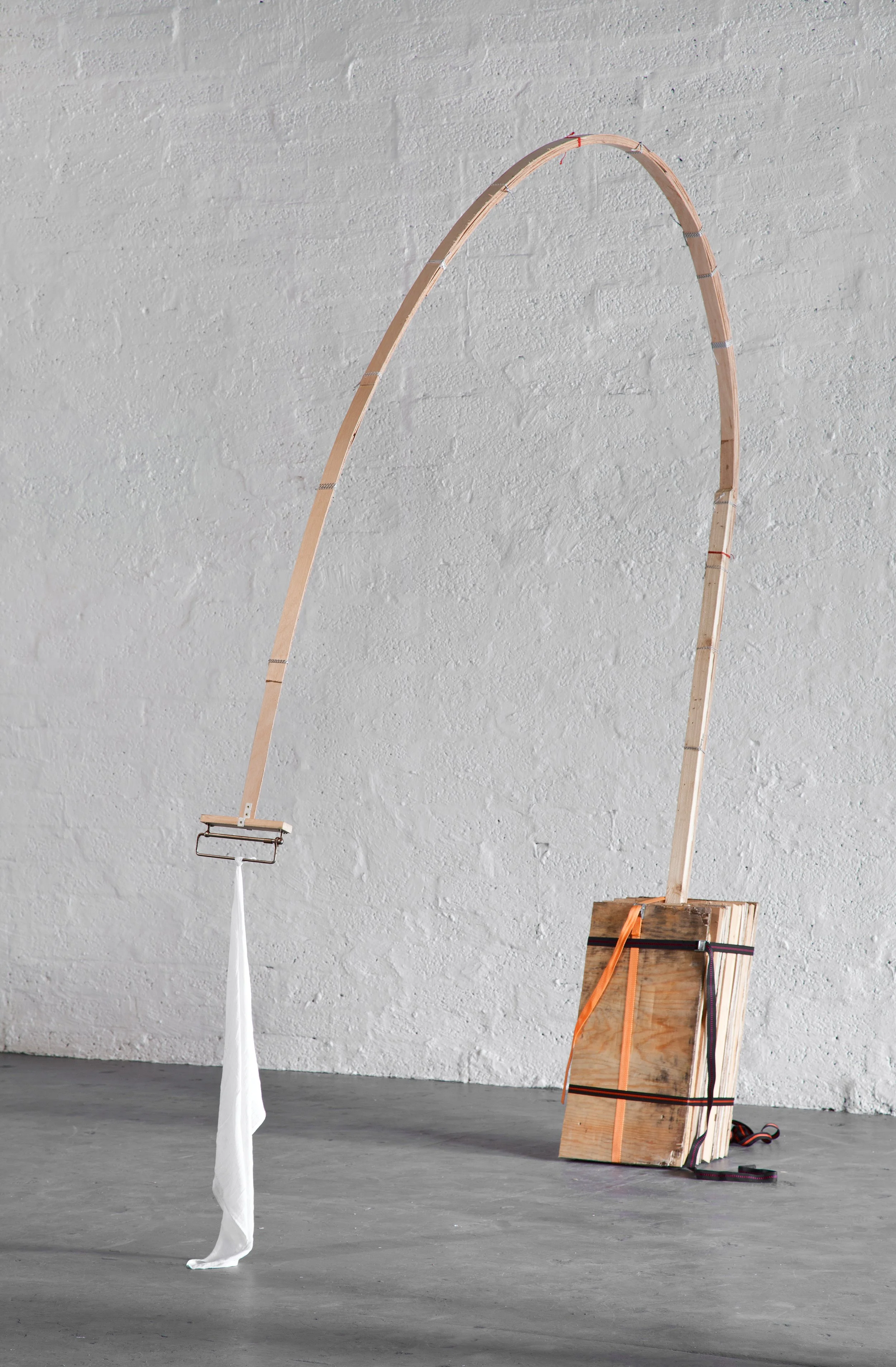
Picture a flag. Imagine it bears your colours. In your configuration. No family crests, officious insignia, orfigurative depictions. Just your own, personal abstraction / When Ardal O'Hanlon was on RTÉ’s LateLate Show to champion Sean Scully's Wall of Light Orange Yellow in a tie-in for the 2012 TV programmeMasterpiece: Ireland's Favourite Painting he readily admitted it was an impossible sell. 'People hate that'he assured us of the work / The relationship between sculpture and walls in a gallery context is mostcommonly a mixture of demarcation and work being provided a neutral vertical backdrop, rarely extendingto physical dependence, conceptual support or aesthetic necessity / Your flag is lying on the floor / Wehave found that artwork which is too sympathetic to interior workspaces can become invulnerable to theft,being utterly invisible / When the 'personal space' of sculpture is hemmed by an additional plane therecan be a co-adoption between the two. It is often an anomaly – not there to augment a galleryenvironment, but to annex part of its space (& time) as a temporary egress for viewers / A Neanderthalmale and female walk into a clearing in the forest. Before them, a modernist domestic dwelling of theInternational Style. They enter the white building / Your flag is flying at the top of a flagpole / Ourrelationship to sculpture is largely based upon the x/y axis of the horizontal plane – our everyday form andpositions gravitationally bound / We embrace the possibility of failure, even when cogent offers abound tojoin dots left floating for us / It goes that if artworks have a job, this is telling a story, imbuing a message,recording something for prosperity. Many assume these abilities are defunct in abstraction / Anysufficiently advanced technology is indistinguishable from magic / On the one hand, a simple proposition – an elemental visual lexicon full of possibility. On the other, frustratingly esoteric visual gibberish / Yourflag is pinned to a wall, displaying its form clearly, its staff 30° to the horizon.
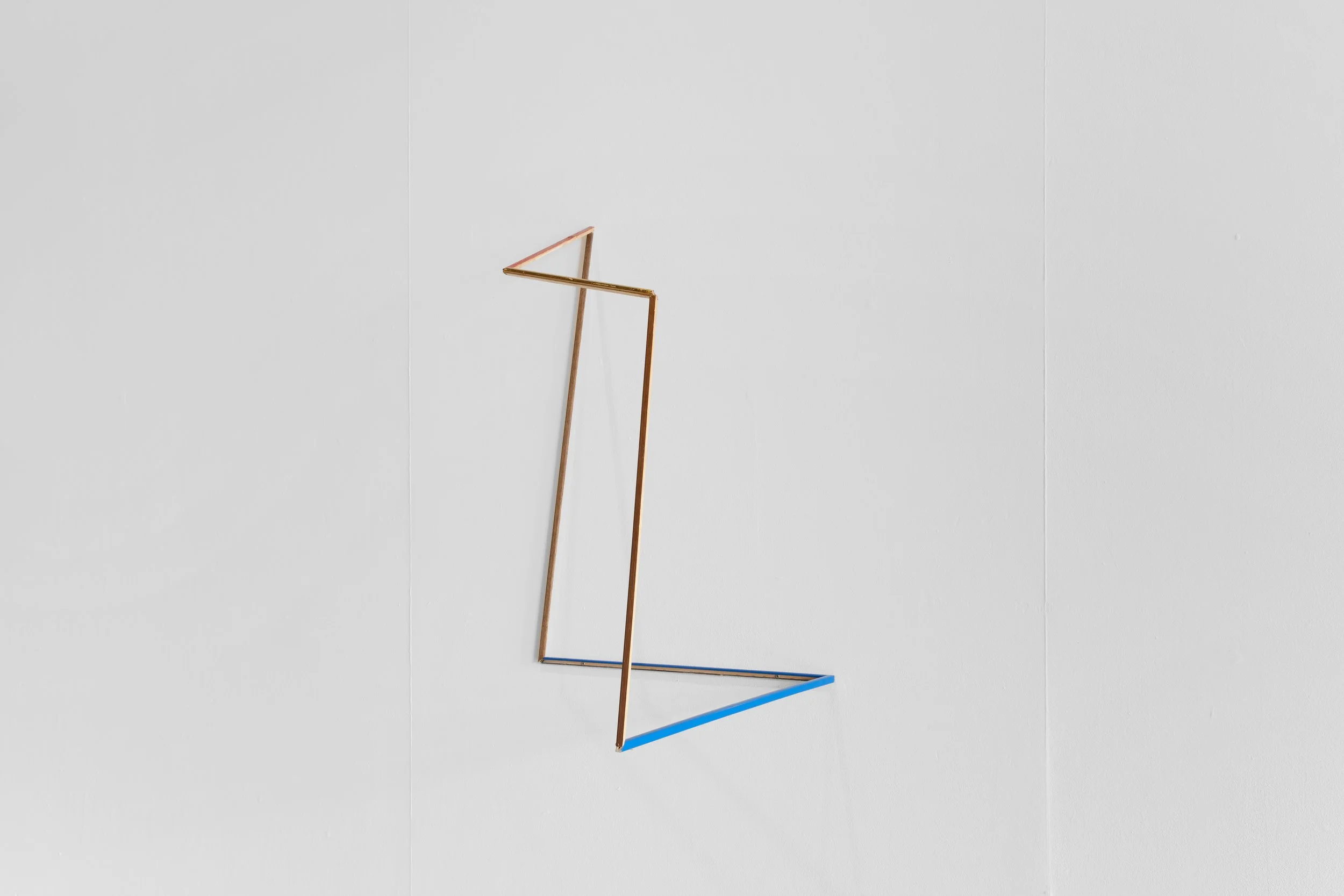
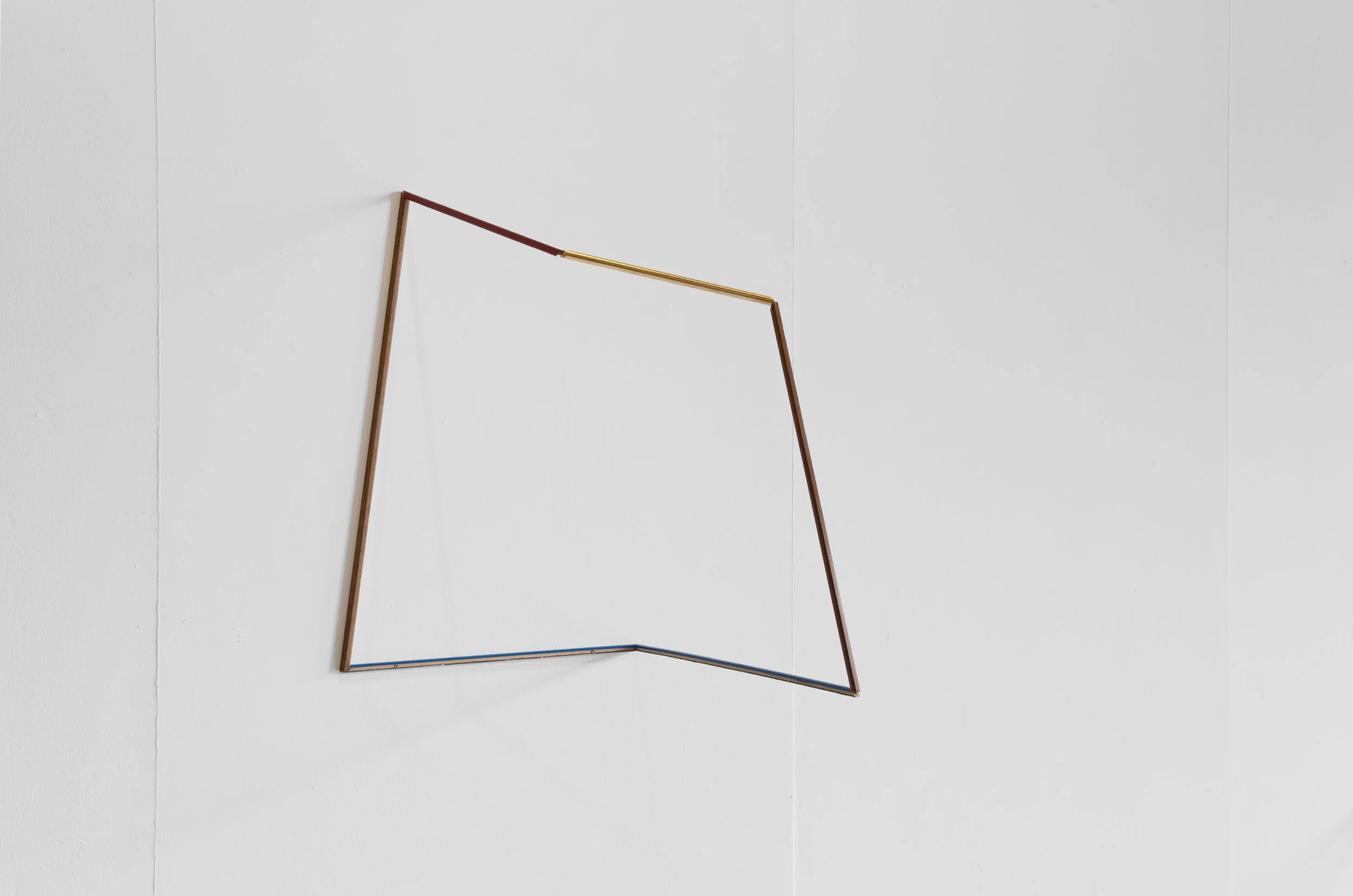
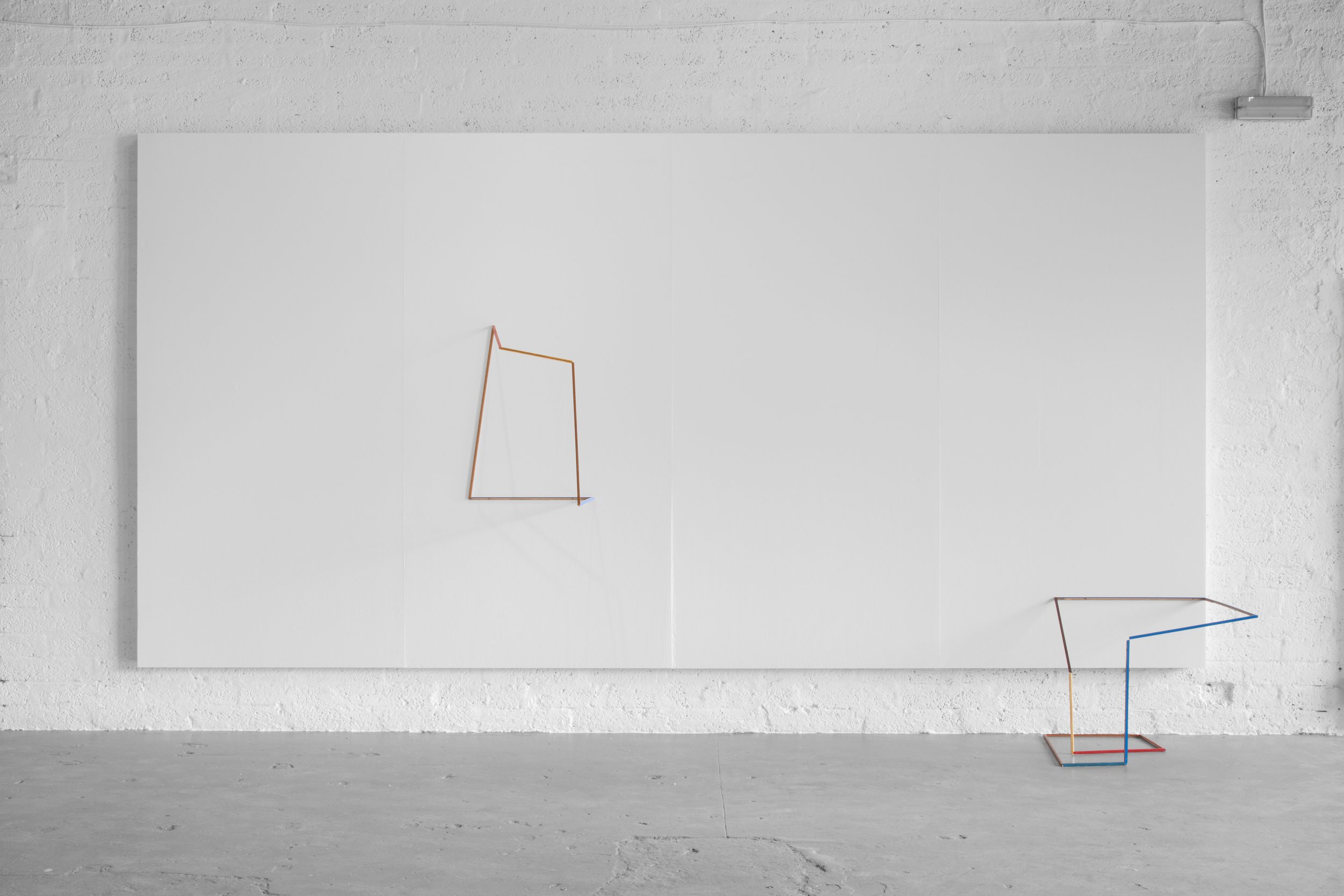
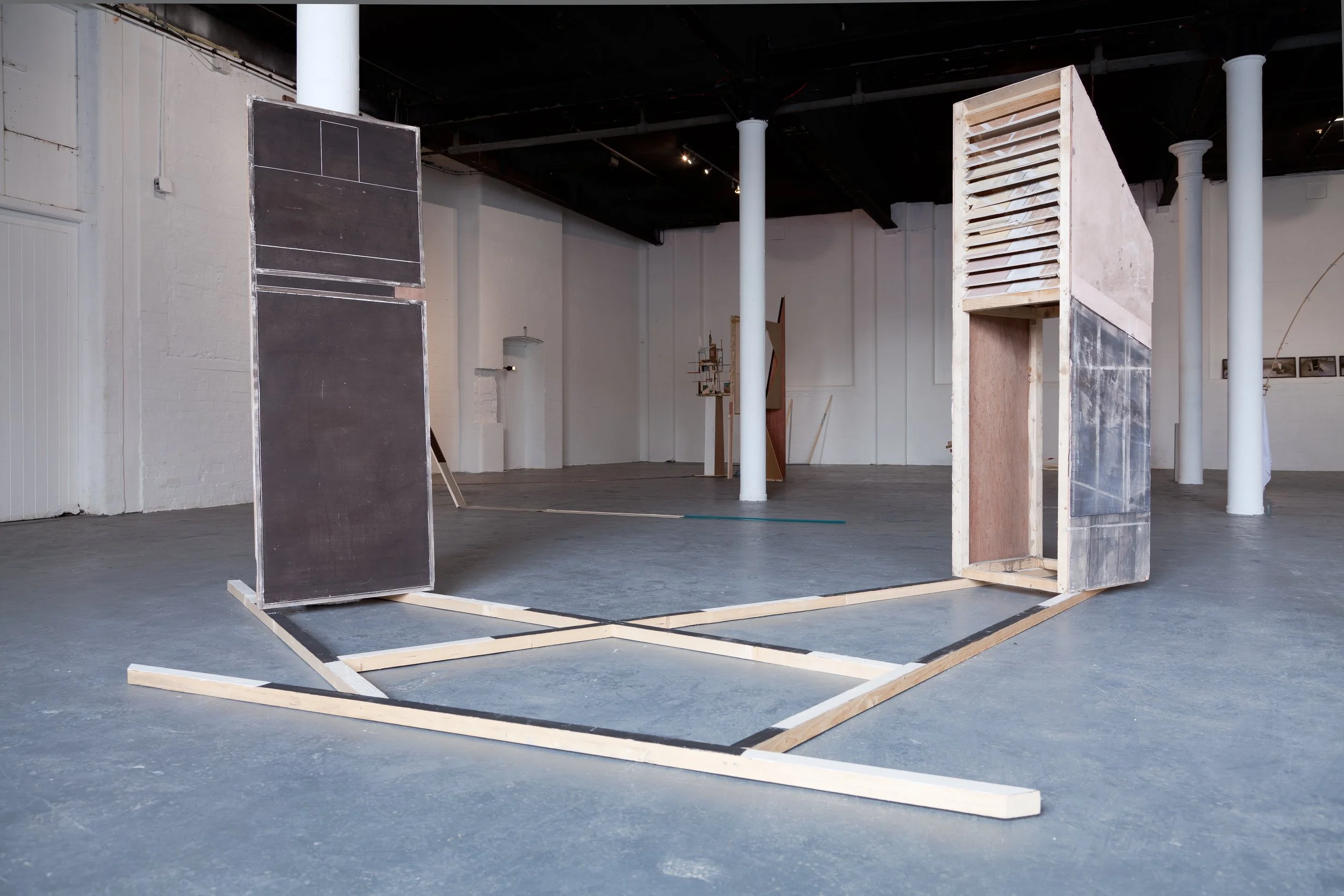
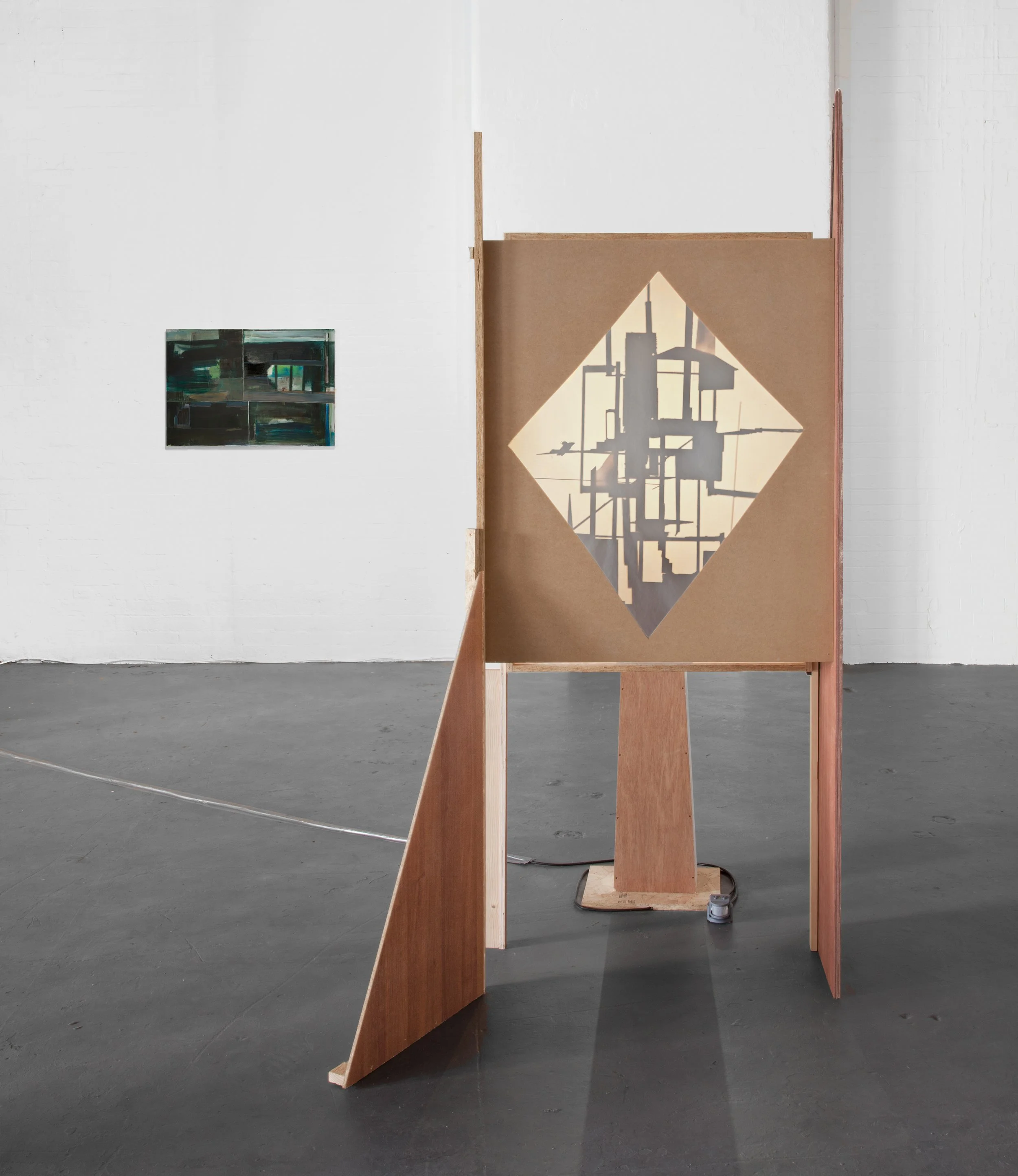
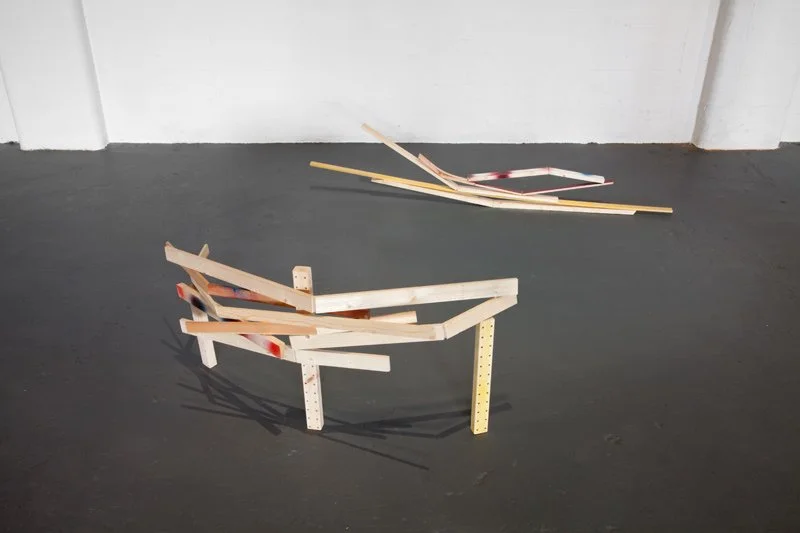
Niel Carroll makes sculptural paintings and painterly sculptures, sometimes pairing them, with a clear,open dialogue between the elements which make up his installations. They seem to aspire to the workedsurface as an ideal, but a malleable, even playful one, reminiscent of what an architect might three-dimensionally sketch if deprived of pencils and paper, doodling within the perimeters, deprived of a margin.
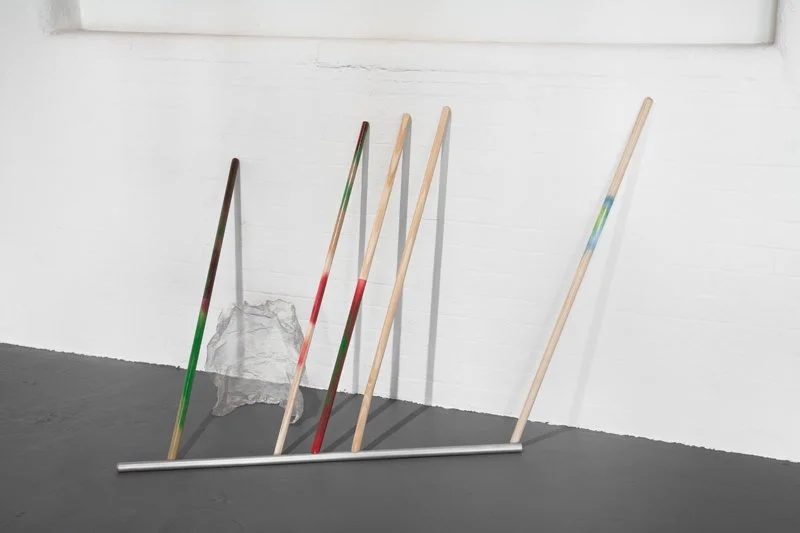
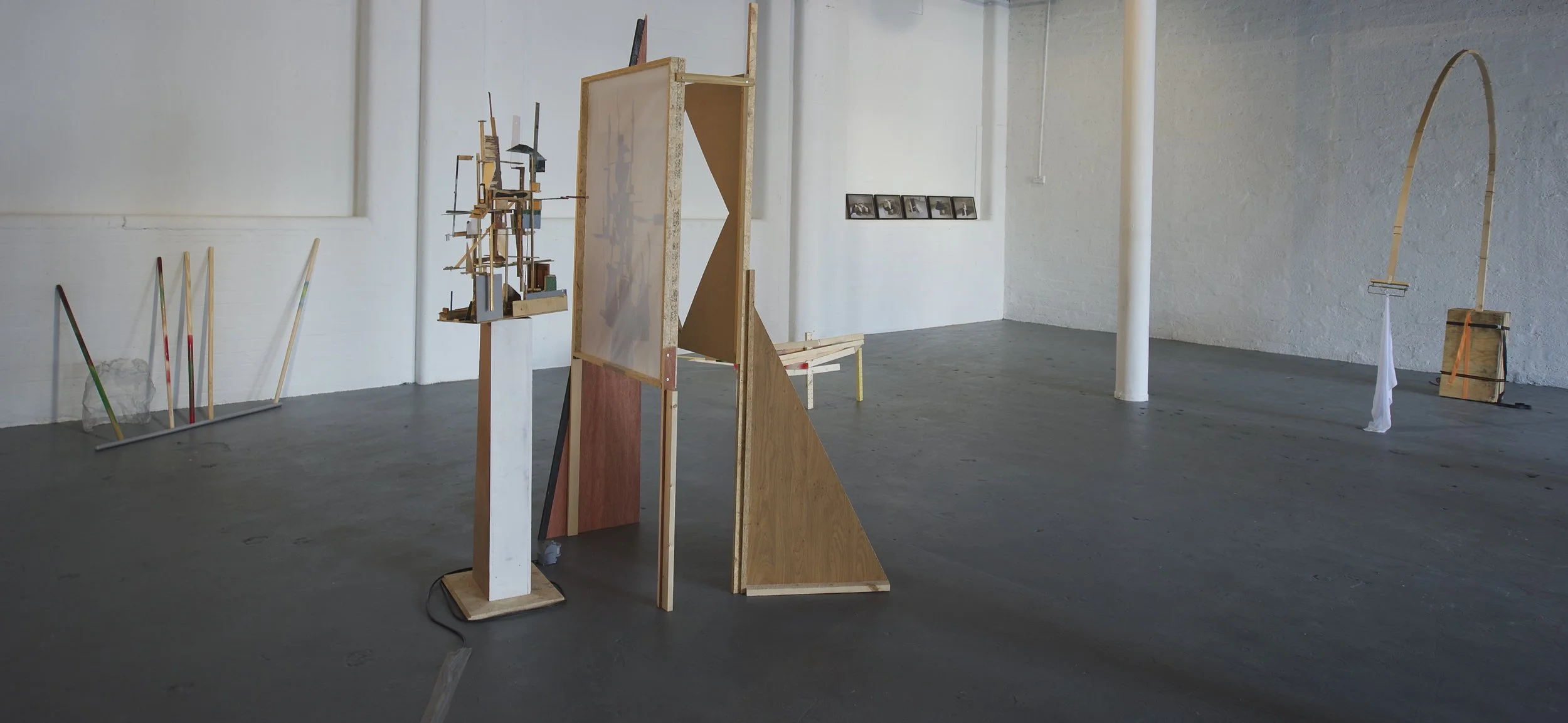
Helen Hughes utilizes both found objects and an array of purchased industrial products in her practice.Like an inventor tinkering in their workshop, she throws away the instruction book - end-product finishingpoints of manufactured goods being her starting point. Her sculptures are rarely inert - possessing andexcising a palpable latent energy upon their surroundings. Her skill is in knowing where to subsequentlystop and begin anew in the viewer realm. We might at first, like the artist, do this by pondering the teeteringde(con)structive possibilities innate in its manifestation. In Revolving Construction, we are privy to the inner workings of a phantasmagorical magic lantern. Even athis most abstract, Tadhg McSweeney’s work seems homely. Much of his material is detrital and used as ifalmost to evoke the childhood skill of configuring disparate objects to conjure so much more than the sumof their parts
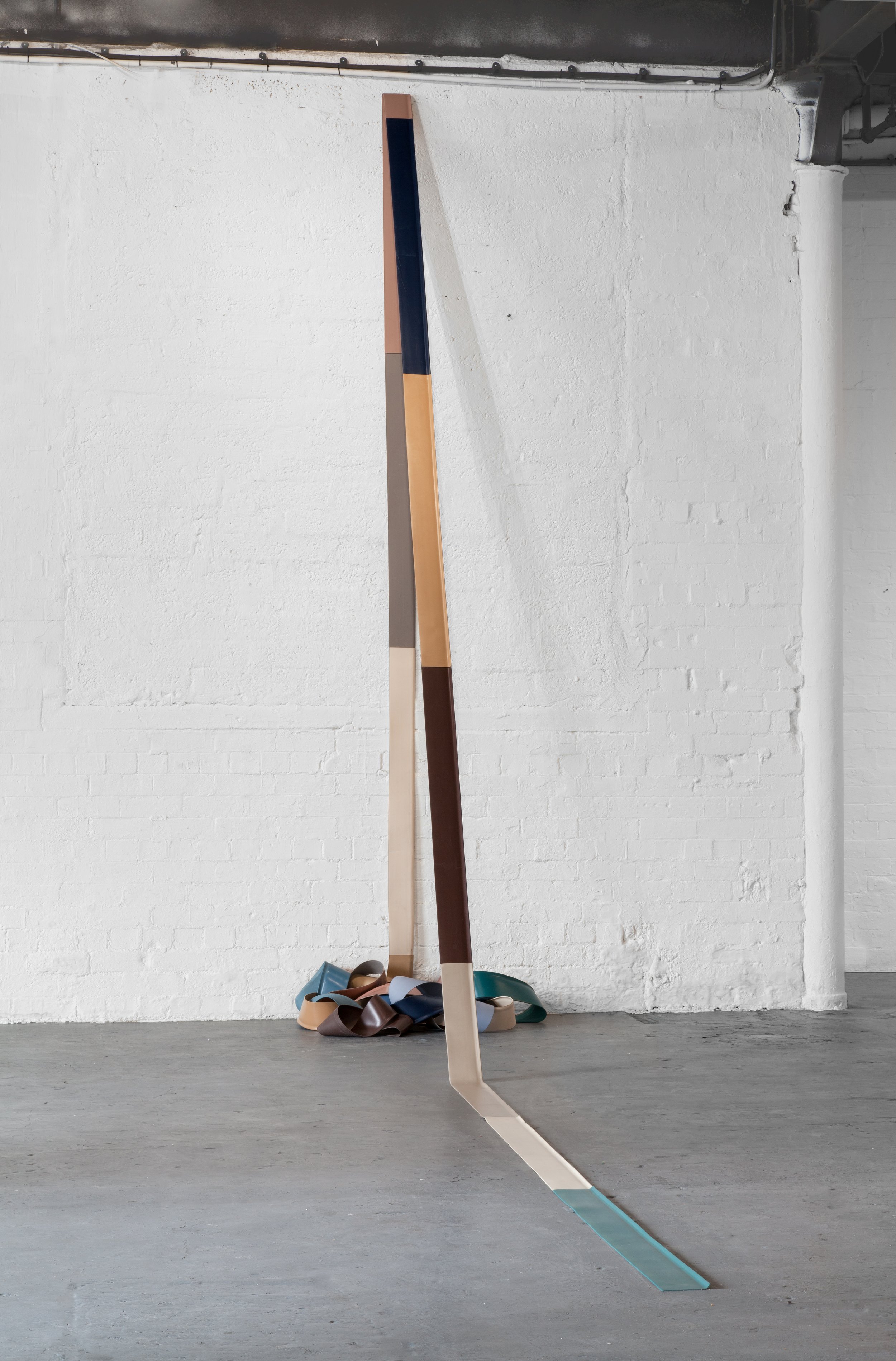
Maggie Madden is interested in system schemata of all types. In Flow, a tangle erupts vertically,diagonally and horizontally towards its (open) end, while her Drawings close in upon themselves in anapparent, infinite conclusion - one akin to a Möbius strip being wired into an invisible fuzzbox.
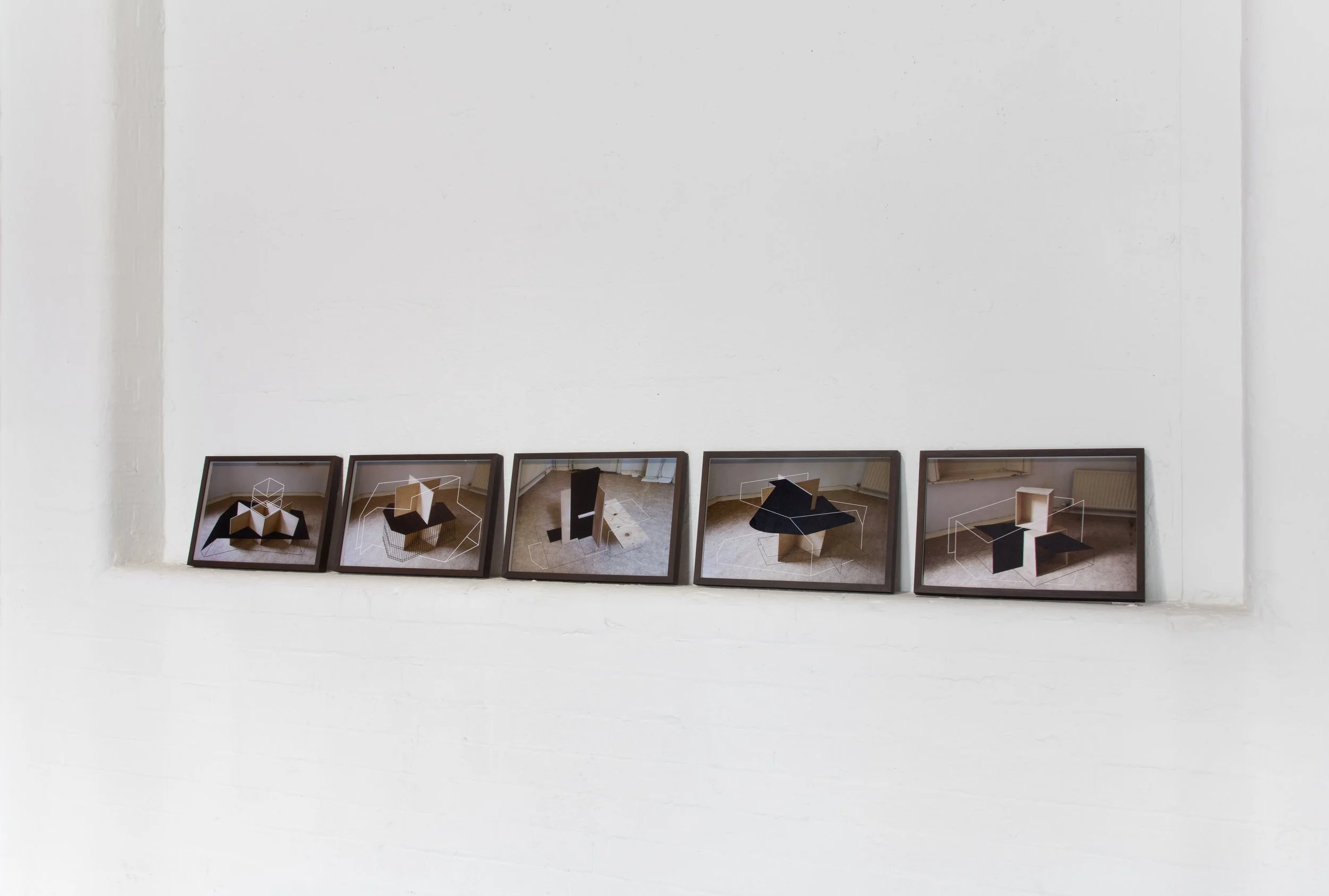
Liam O’Callaghan has a sensitive command in matters of volume and scale, which is readily apparent inthe spatial economy of his sculptural work. With his sculpture In this Moment of Still Surrender, we areenticed to interpret a curious configuration. We might choose between reading a line of supplication, fear,generosity, or a darkly comic gesture with no need of a punchline. In his Companion Structures series, hepins the dimensionality of his photographed objects (and subsequent digital interventions thereof) to asingle vista, impossible to prove impossible by the imagination.
Jane Fogarty & David Lunney's Adorned Documents addresses the fetishisation of the variousconstituents {information panels, objects, paraphernalia, documentation} that make up the experience ofconsuming art - it rarely being bestowed to the world in a contextual vacuum. Here, process, interpretation,design and presentation are melded into a flexile loop which can be entered into at any point.