FORCES!
8 - 29 November 2013
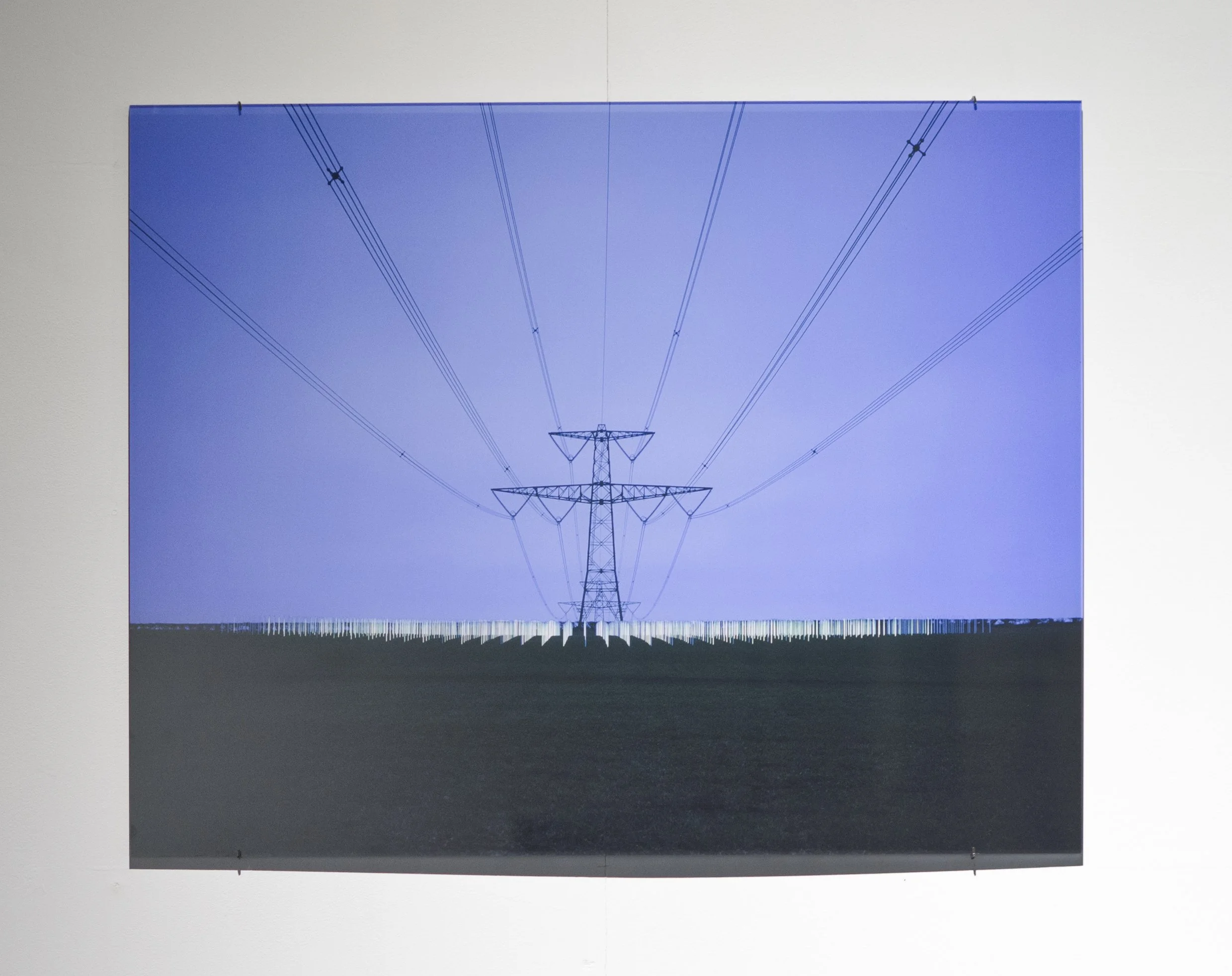
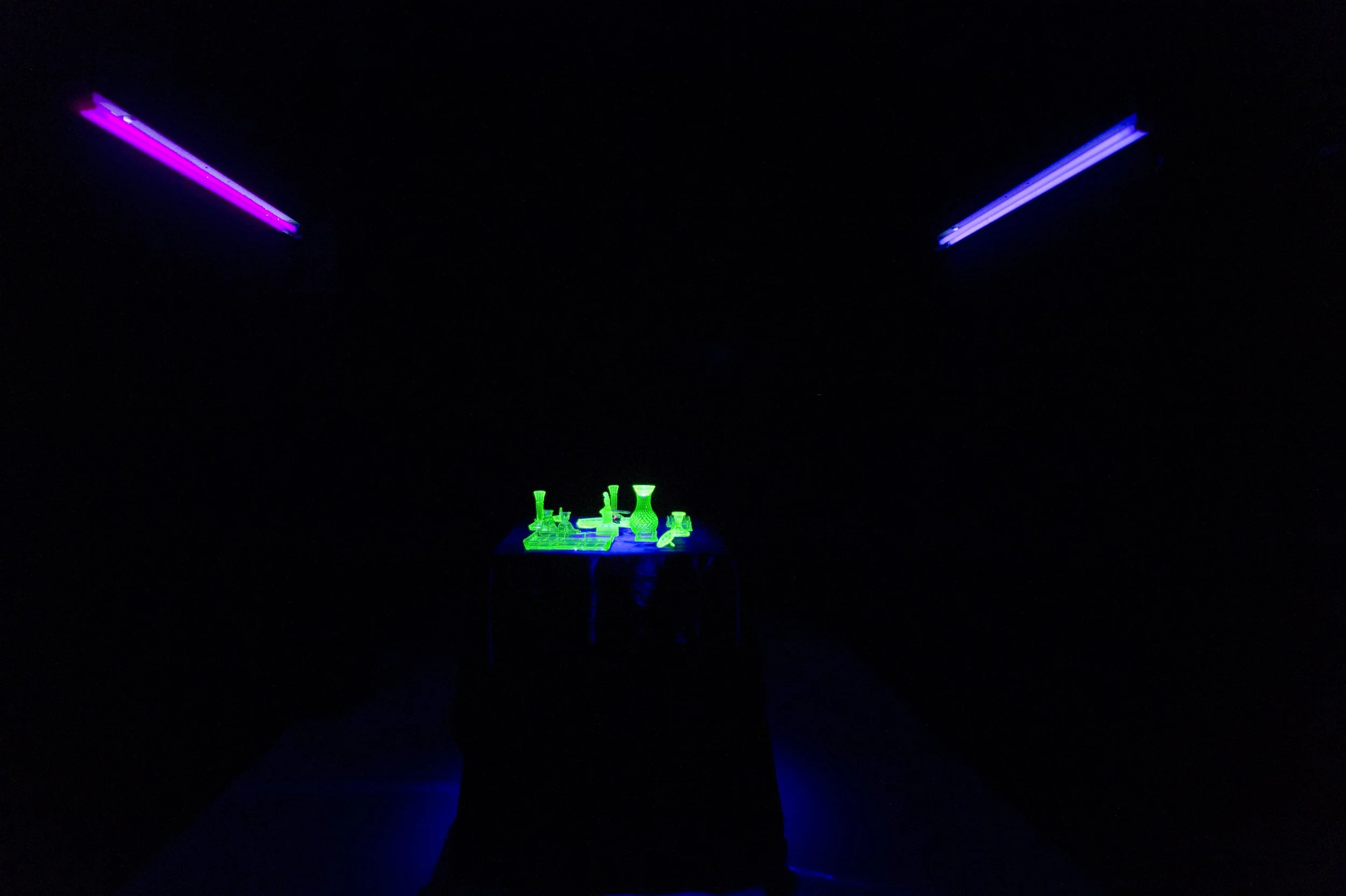
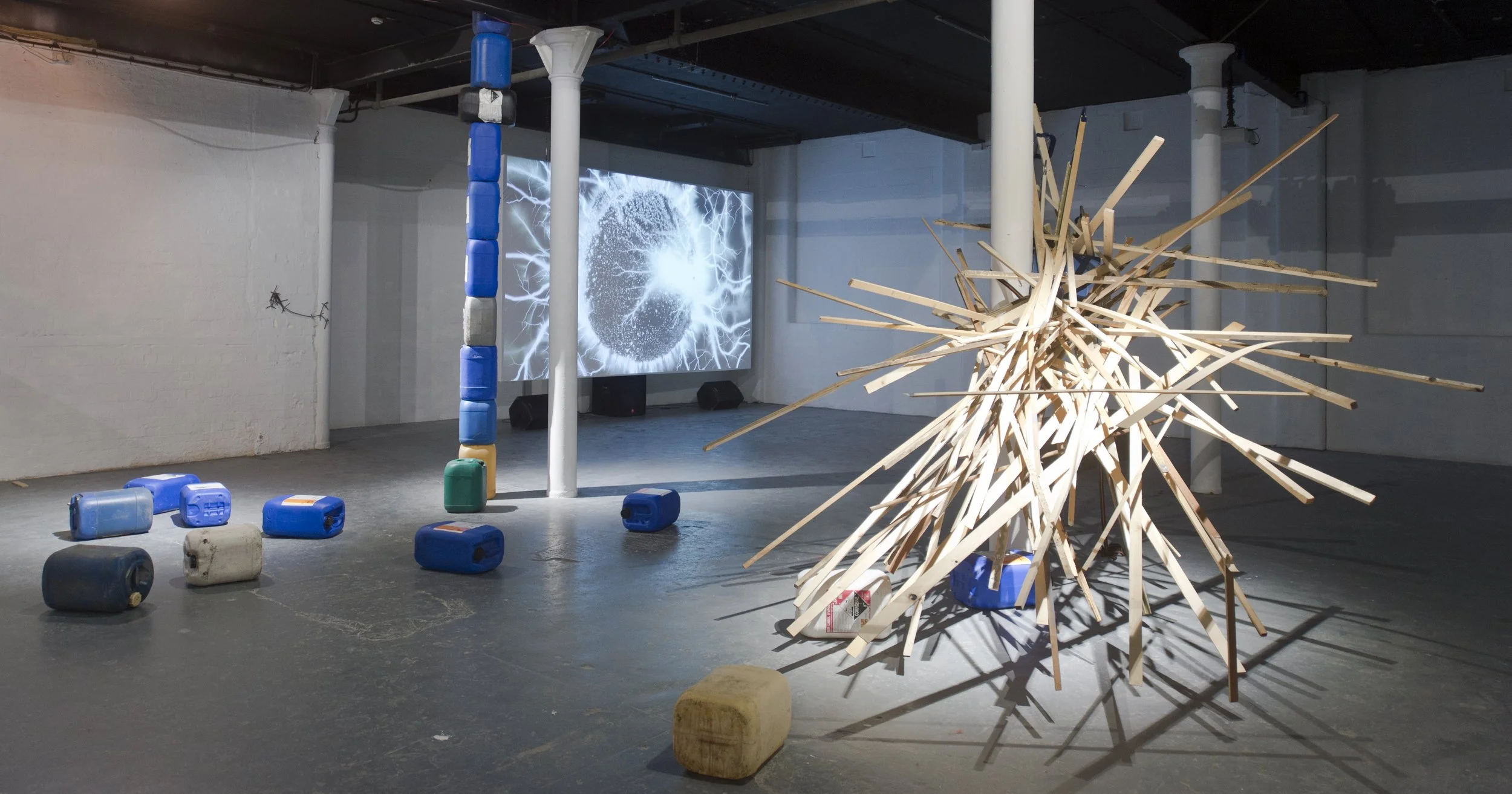
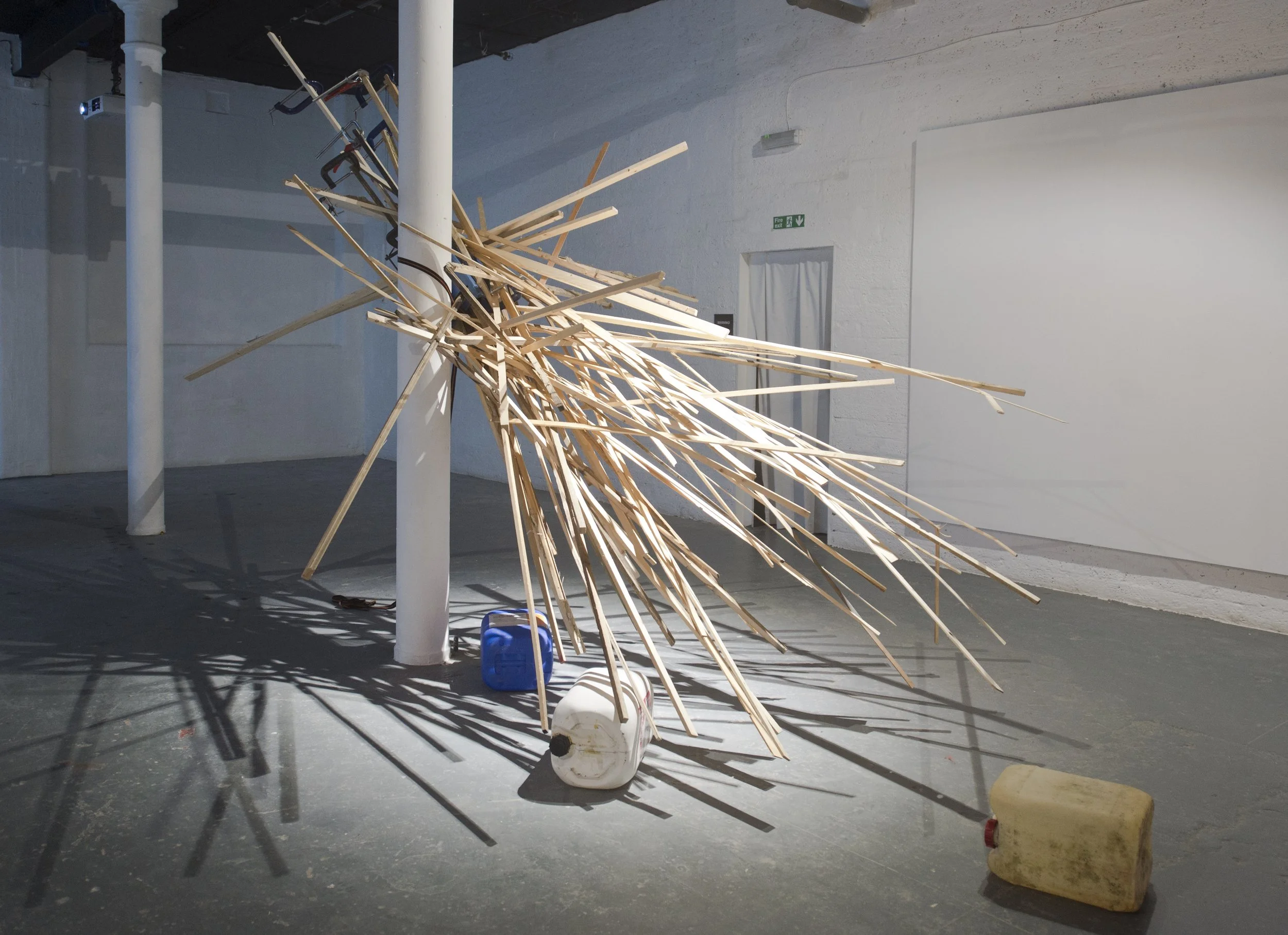
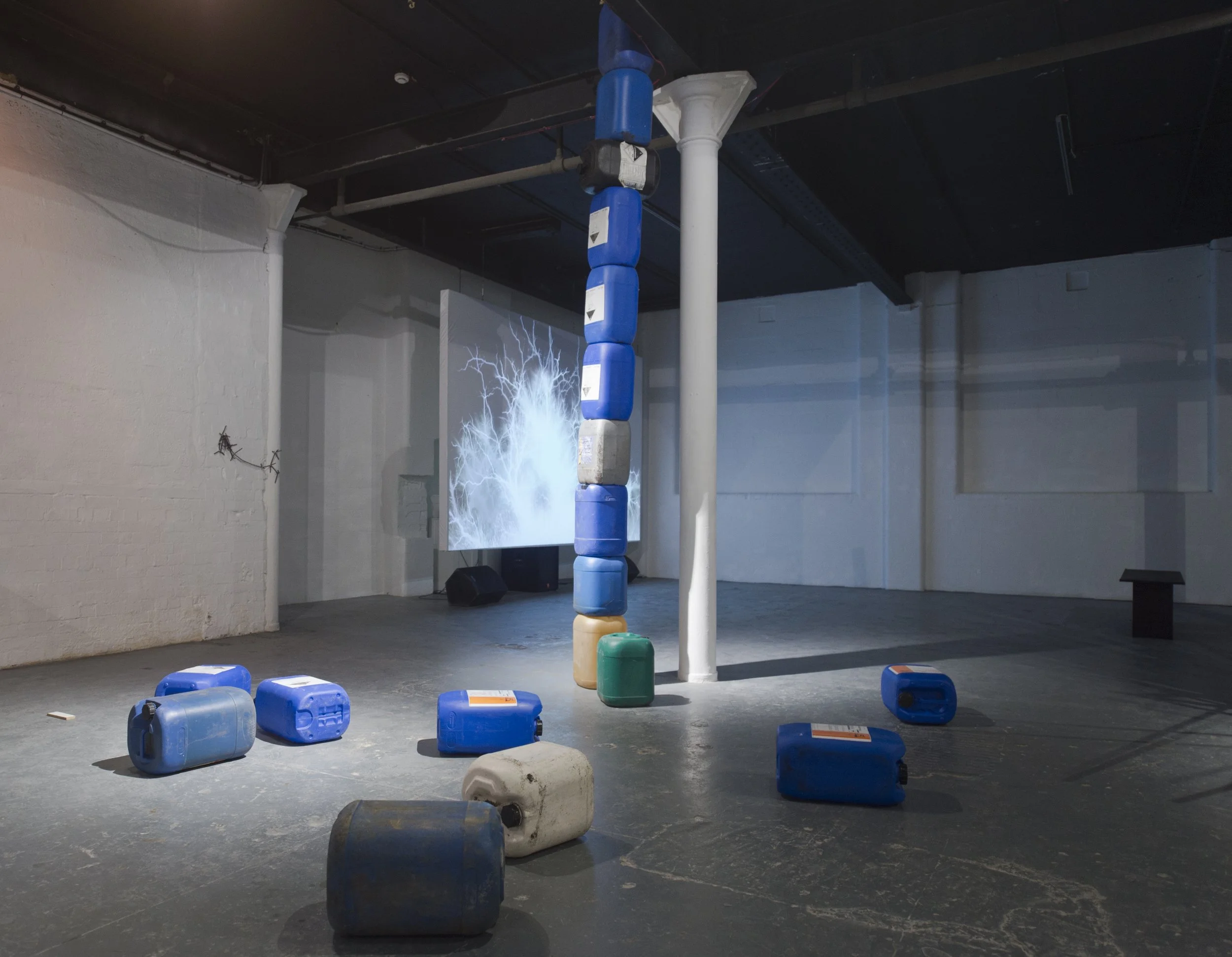
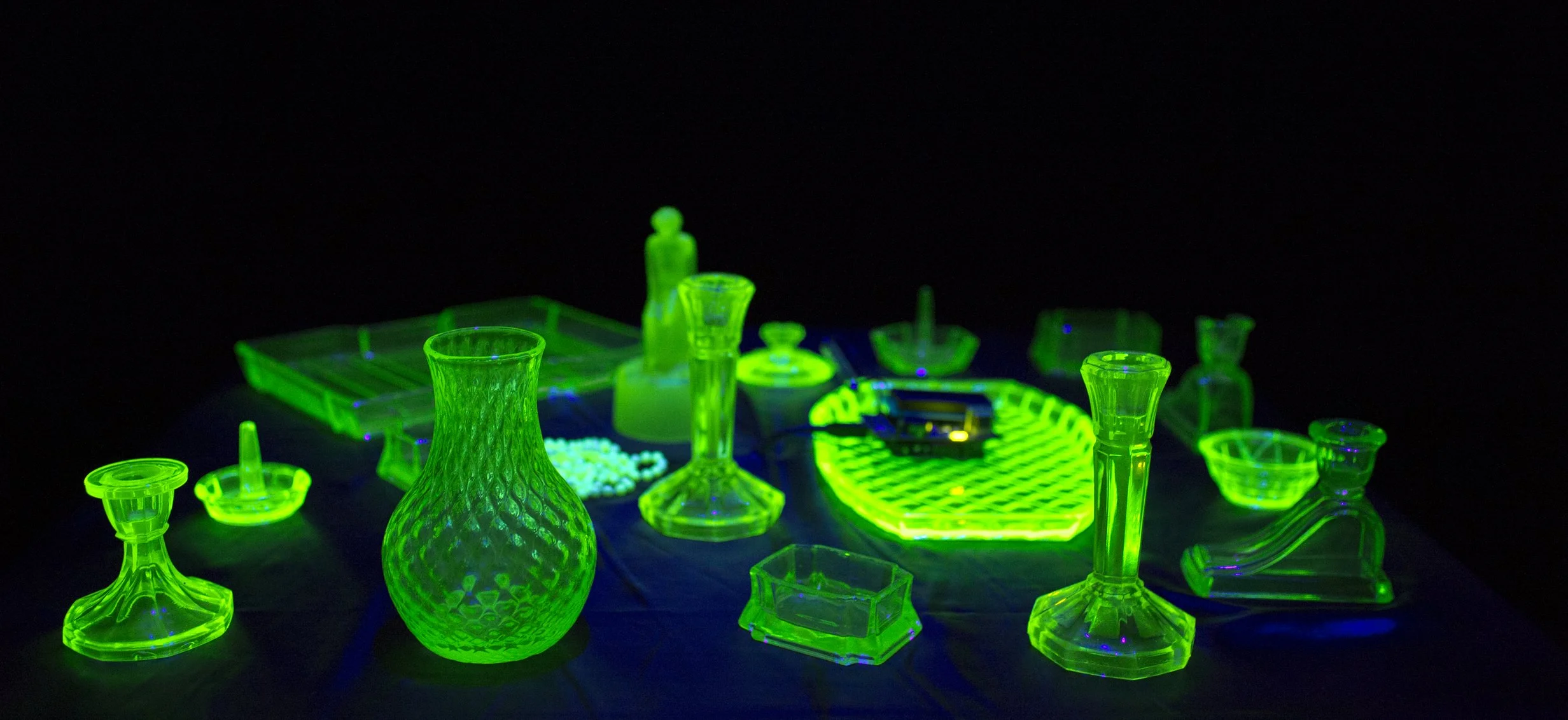
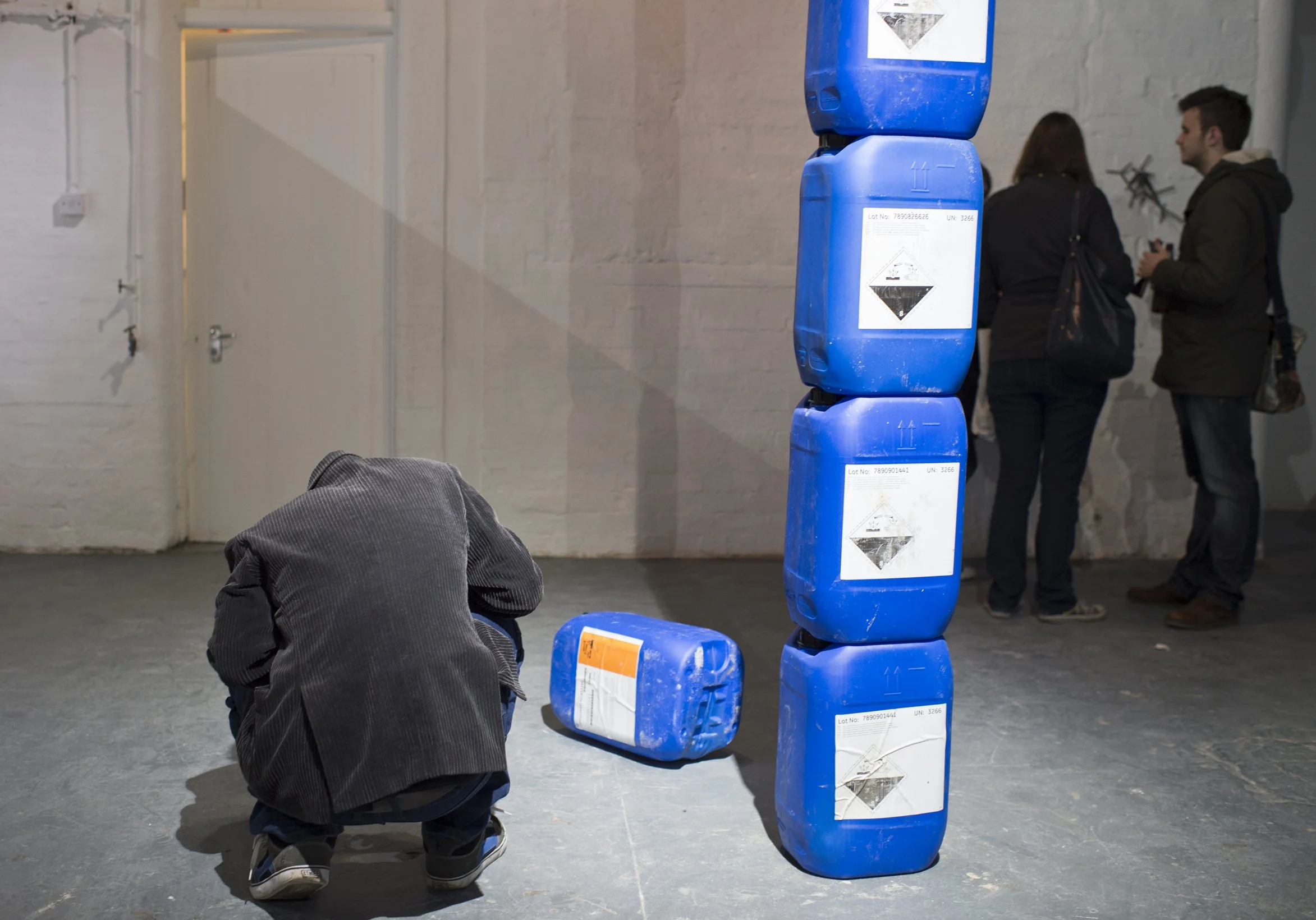
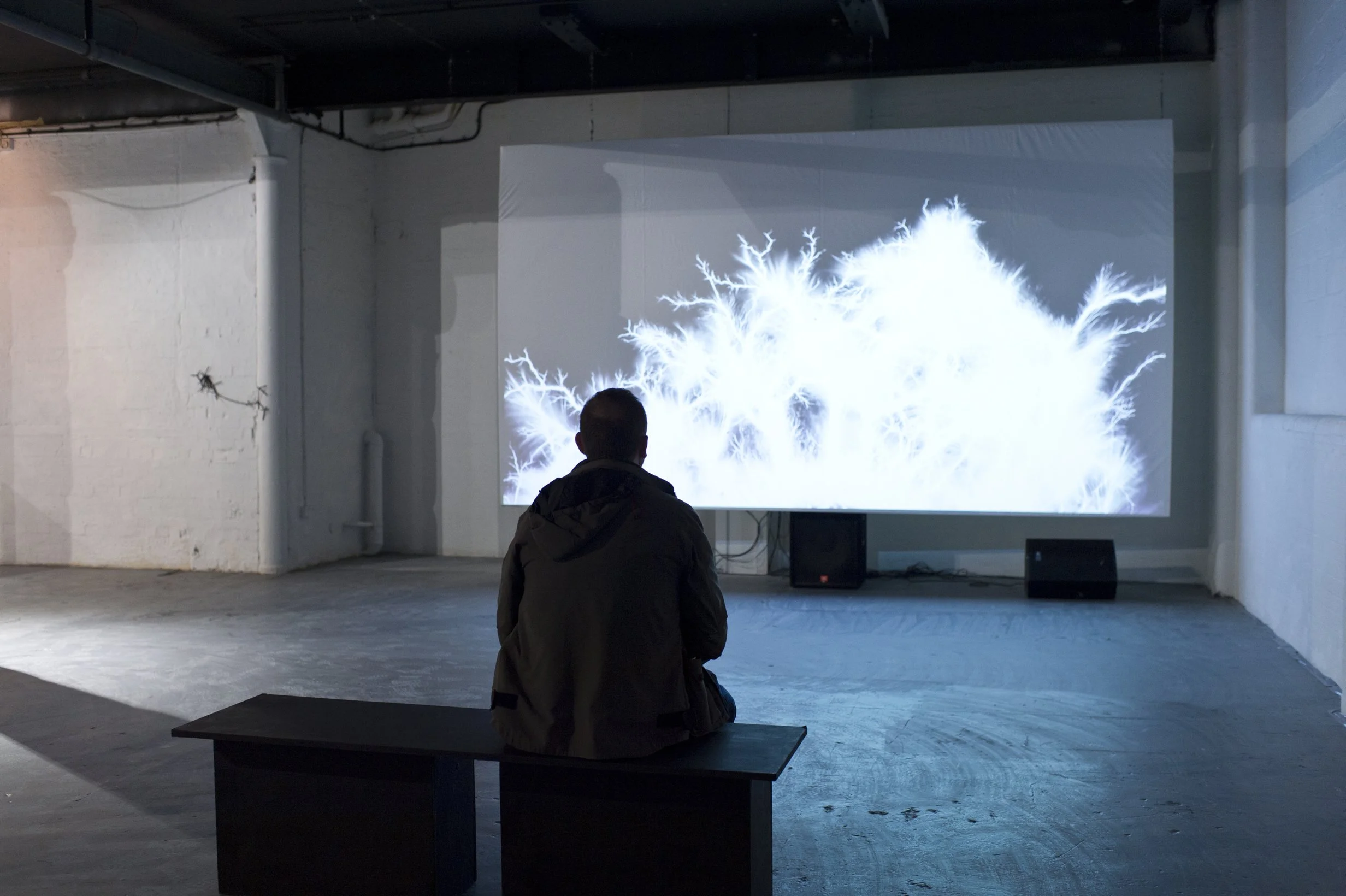
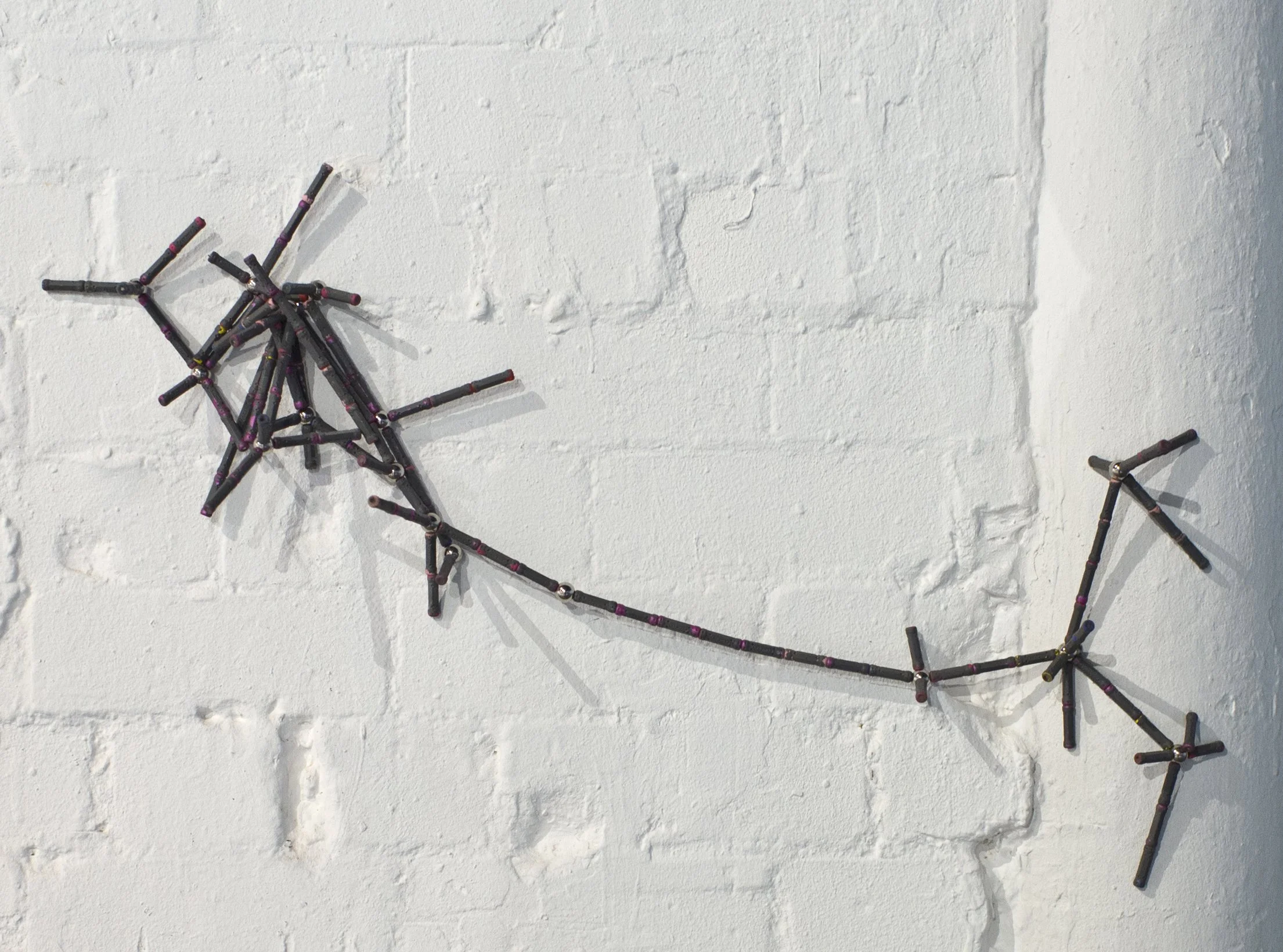
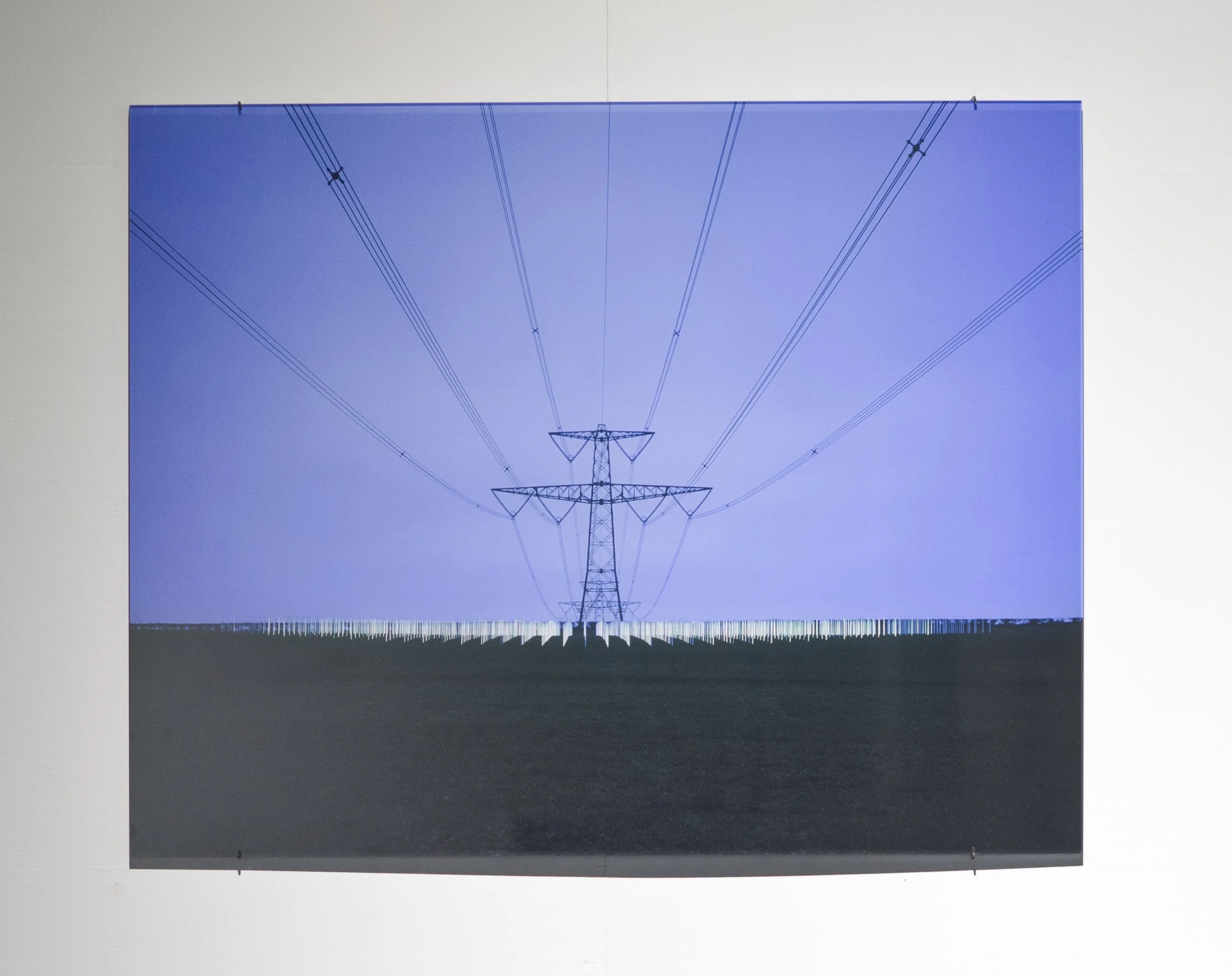
Forces investigates the motivations and decisions of artists who relinquish control to natural forces or attempt to harness them in their work. Each of the exhibition’s dynamic works has been made from found objects which, through the exploitation of specific scientific properties of the materials, have become repurposed and animated by the artists. Radiation, electricity, electrical resonance, entropy, magnetism and gravity are manipulated in order to create works where the final outcome is uncertain. Frequently flirting with danger, the exhibition becomes a high energy, tense environment as audiences become compelled by the unpredictability of the works which they are viewing. Aisling O’Beirn and Pól Murphy both experiment with gravity and balance as a defining force within their work. In O’Beirn’s Entropy, an unstable sculptural structure radiates from one of the gallery’s structural columns. The construction, made from a hodge-podge of salvaged timber lengths, has been built by balancing the timbers, Jenga-like, on each other to test the structure’s tipping point. The structure will always be subject to collapse, with this failure acting as an integral part of the process. Whilst the structure can always be rebuilt, it can never be the same structure twice. Murphy’s work focuses more on the performative element of reconstruction throughout the run of the exhibition. Free-standing columns of oil drums are balanced floor-to-ceiling within the gallery, creating the illusion that these totemic structures are supporting the ceiling and preventing its collapse. A tension exists within the gallery as the daunting four-metre high oil drum towers are at risk of collapsing, destroying themselves, other works in the exhibition, and potentially structural elements within the gallery. The artist’s challenge is to overcome many external forces to complete the building of the towers as a performative element manifests in the construction - and potential reconstruction - of the work. Moving away from physical materials, Richard Box and Thorsten Fleisch explore the properties of electricity, one closely under a microscope, the other from a distance. Both use the visual effect of electricity to create mesmerising works, one intense and pulsating, the other minimal and drifting. Fleisch began casually playing with high voltages when he built his own Tesla Coil, a device that makes high voltage discharge into the air. Captivated by the lightning-like discharges, he set out to translate this power to film, inspired by the mad scientists of horror movies from the 1930s and ‘40s. Humbly honoring early special effects for film before the term was even coined, Fleisch wanted to make an electronic film that was quite literally made out of electricity. In Energie!, an uncontrolled high voltage discharge of 30,000 volts exposes multiple sheets of photographic paper which are then looped and edited to create new visual systems of electron organisation. The high-voltage current leaves traces of lightning discharges on the page, making visible the elegant ways in which the usually untraceable discharges cut their way through space. Box’s FIELD is a documentary about his 2004 work of the same name. The original work existed as an installation of found neon tubes arranged in a grid beneath electricity pylons that glowed in pulsating waves via the effects of electrical resonance, picking up the waste emission from overhead power lines. The piece is simple yet spectacular, making visible what would otherwise go unnoticed in a similar way to Fleisch’s Energie!. The field of tubes flickers into life across the hillside as the early evening light fades, with each evening’s performance being impossible to predict, heavily dependent on the weather. In all the best traditions of land art it is conditional on the variations of the great outdoors, and requires its audience to be patient. Finally, Christian Cherene has created an immersive and interactive sound installation in a darkened, black-lit space in the exhibition, accompanied by dramatic strobe lighting. Cherene’s Stochastic Process 92 sees a deconstruction of techno music using a Geiger counter to exploit the randomness inherent in the radioactive decay of uranium glass objects. Radiation is a by-product of the choice of material used in order to create the distinctive green colouring so desirable in these objects, simultaneously beautiful and indicative of danger. Nothing on display within Forces is exactly as the artists intended or could have accurately predicted or anticipated. The influence and affects of outside forces have been welcomed and celebrated, as the artists have pushed their chosen materials to their limits, not quite knowing what the outcome will be. They exploit these materials for their own artistic gain, examining the flexibility of wood, the luminescence of gas inside lighting tubes, stackable form design, and random signal clicks generated from measuring radioactivity. In many ways it is a case of trial and error, where ‘error’ is embraced just as fully as success. The artists do not know the outcomes of their experimentation, but here we see them in their attempts to discover new possibilities when control is abnegated, setting things in motion then stepping back and embracing the unpredictable and extraordinary effects of outside forces.